Human Resources Training Timmins
Seeking HR training and legal assistance in Timmins that secures compliance and decreases disputes. Equip supervisors to manage ESA hours, overtime, and breaks; meet Human Rights accommodation duties; and coordinate onboarding, coaching, and progressive discipline with detailed documentation. Standardize investigation protocols, preserve evidence, and relate findings to OHSA/WSIB corrective actions. Work with local, vetted professionals with sector background, SLAs, and defensible templates that align with your processes. You'll see how to build accountable systems that remain solid under scrutiny.
Key Takeaways
- Professional HR education for Timmins organizations addressing workplace investigations, onboarding, performance management, and skills verification following Ontario laws.
- ESA regulatory assistance: comprehensive coverage of hours of work, overtime rules, and break entitlements, including maintenance of employment records, work agreements, and separation protocols.
- Human rights guidelines: covering workplace accommodation, confidentiality protocols, undue hardship assessment, and regulatory-aligned decision procedures.
- Investigation procedures: planning and defining scope, securing and maintaining evidence, conducting impartial interviews, analysis of credibility, and comprehensive action-oriented reports.
- Health and safety compliance: OHSA due diligence practices, WSIB claim handling and RTW program management, implementation of hazard controls, and training program updates based on investigation outcomes.
Understanding HR Training's Value for Timmins Organizations
Despite tight employment conditions, HR training enables Timmins employers to manage risk, meet legal obligations, and establish accountable workplaces. You improve decision-making, streamline procedures, and minimize costly disputes. With specialized learning, supervisors implement guidelines effectively, track employee progress, and handle complaints early. You also coordinate recruitment, onboarding, and coaching to reduce the skills gap, so teams execute reliably.
Professional development clarifies expectations, establishes benchmarks, and improves investigative processes, which safeguards your organization and employees. You'll refine retention strategies by linking professional growth, acknowledgment systems, and equitable scheduling to measurable outcomes. Data-informed HR practices help you anticipate staffing demands, monitor attendance, and strengthen safety protocols. When leaders demonstrate proper behavior and convey requirements, you minimize staff turnover, boost productivity, and maintain reputation - essential advantages for Timmins employers.
A Guide to Ontario's ESA in Today's Workplace
It's essential to have clear procedures for work schedules, overtime rules, and rest periods that conform to Ontario's Employment Standards Act and your operational requirements. Implement appropriate overtime calculations, track time precisely, and plan necessary statutory meal breaks and rest times. During separations, calculate proper notice periods, termination compensation, and severance payments, document all decisions thoroughly, and adhere to payment schedules.
Working Hours, Breaks, and Overtime
Although business requirements fluctuate, Ontario's Employment Standards Act (ESA) defines specific rules on work hours, overtime periods, and required breaks. Create schedules that comply with daily and weekly limits unless you have valid written agreements and ESA-compliant averaging. Make sure to record all hours, including segmented shifts, travel time when applicable, and on-call responsibilities.
Trigger overtime payments at 44 hours per week except when covered by an averaging agreement. Be sure to properly calculate overtime and apply the appropriate rate, while keeping approval documentation. Employees need at least 11 consecutive hours off daily and 24 consecutive hours off weekly (or two full days during 14 days).
Make certain a 30‑minute unpaid meal break is given after no more than five hours in a row. Oversee rest intervals between shifts, prevent excessive consecutive workdays, and convey policies effectively. Review records periodically.
Termination and Severance Rules
Given the legal implications of terminations, create your termination protocol around the ESA's basic requirements and record every step. Verify employee status, tenure, wage history, and written contracts. Calculate termination compensation: statutory notice or pay in lieu, paid time off, remaining compensation, and ongoing benefits. Implement just-cause standards with discretion; conduct investigations, allow the employee an opportunity to respond, and document findings.
Review severance eligibility separately. If your Ontario payroll reaches $2.5M or the employee has worked for over five years and your facility is ceasing operations, perform a severance assessment: one week per year of service, prorated, up to 26 weeks, determined by regular wages plus non-discretionary remuneration. Issue a detailed termination letter, timeline, and ROE. Examine decisions for consistency, non-discrimination, and possible retaliation concerns.
Duty to Accommodate and Human Rights Compliance
You need to fulfill Ontario Human Rights Code standards by preventing discrimination and addressing accommodation requests. Establish clear procedures: analyze needs, obtain only necessary documentation, determine options, and document decisions and timelines. Execute accommodations effectively through collaborative planning, education for supervisors, and regular monitoring to ensure appropriateness and legal compliance.
Ontario Obligations Overview
In Ontario, employers must comply with the Human Rights Code and proactively accommodate employees to the point of undue hardship. You must identify barriers tied to protected grounds, assess individualized needs, and document objective evidence supporting any limits. Align your policies with federal and provincial requirements, including payroll compliance and privacy obligations, to maintain fair processes and legal data processing.
It's your duty to setting clear procedures for accommodation requests, promptly triaging them, and safeguarding personal and medical details shared only when required. Educate supervisors to recognize situations requiring accommodation and eliminate unfair treatment or backlash. Maintain consistent criteria for determining undue hardship, analyzing cost, external funding, and safety concerns. Document choices, rationale, and timelines to show good-faith compliance.
Developing Practical Accommodations
While obligations set the framework, performance drives compliance. The process of accommodation involves linking individualized needs to job requirements, recording determinations, and tracking results. Initiate through a structured intake: confirm functional limitations, essential duties, and potential barriers. Implement proven solutions-adjustable work hours, modified duties, distance or mixed working options, workplace adaptations, and supportive technology. Maintain timely, good‑faith dialogue, set clear timelines, and determine responsibility.
Apply a comprehensive proportionality test: assess effectiveness, cost, safety and wellness, and team performance implications. Ensure privacy standards-obtain only essential information; secure files. Educate supervisors to recognize triggers and escalate without delay. Pilot accommodations, assess performance metrics, and refine. When restrictions arise, demonstrate undue hardship with tangible documentation. Communicate decisions professionally, present alternatives, and conduct periodic reviews to sustain compliance.
Creating Results-Driven Onboarding and Orientation Programs
Given that onboarding sets the foundation for compliance and performance from the beginning, develop your process as a structured, time-bound approach that harmonizes culture, roles, and policies. Utilize a Welcome checklist to organize day-one tasks: tax forms, contracts, IT access, safety certifications, and privacy acknowledgments. Arrange training meetings on data security, anti-harassment, employment standards, and health and safety. Map out a 30-60-90 day plan with defined targets and essential learning modules.
Set up mentorship programs to facilitate adaptation, maintain standards, and identify potential issues quickly. Deliver detailed work instructions, safety concerns, and escalation paths. Organize quick regulatory sessions in the initial and fourth week to ensure clarity. Adapt content for local facility processes, operational timing, and legal obligations. Monitor progress, evaluate knowledge, and record confirmations. Refine using employee suggestions and review data.
Managing Performance and Progressive Discipline
Setting clear expectations from the start anchors performance management and reduces legal risk. This involves defining key responsibilities, quantifiable benchmarks, and schedules. Link goals with business outcomes and document them. Hold consistent meetings to deliver immediate feedback, reinforce strengths, and address shortcomings. Use objective metrics, rather than subjective opinions, to avoid bias.
When performance declines, follow progressive discipline systematically. Initiate with oral cautions, then move to written documentation, suspensions, and termination if changes aren't achieved. Each stage demands corrective documentation that details the issue, policy citation, prior guidance, standards, support provided, and deadlines. Provide education, resources, and progress reviews to support success. Log every meeting and employee reaction. Tie decisions to guidelines and past cases to maintain fairness. Finish the cycle with follow-up reviews and adjust goals when progress is made.
How to Properly Conduct Workplace Investigations
Even before a complaint surfaces, it's essential to have a comprehensive, legally appropriate investigation protocol ready to deploy. Define initiation criteria, select an unbiased investigator, and determine clear timelines. Issue a litigation hold to immediately preserve evidence: electronic communications, CCTV, hardware, and paper files. Clearly outline confidentiality expectations and non-retaliation policies in written form.
Commence with a structured approach encompassing allegations, policies affected, required documentation, and a systematic witness lineup. Utilize uniform witness questioning formats, ask probing questions, and maintain objective, immediate notes. Hold credibility determinations distinct from conclusions until you've confirmed accounts against documents and supporting data.
Maintain a defensible chain of custody for every document. Provide status notifications without jeopardizing integrity. Produce a concise report: accusations, approach, evidence, credibility assessment, conclusions, and policy implications. Subsequently put in place corrective solutions and oversee compliance.
Health and Safety Standards: WSIB and OHSA Compliance
Your investigative procedures should be integrated with your health and safety system - findings from workplace events and issues must inform prevention. Connect every observation to improvement steps, training updates, and technical or management safeguards. Build OHSA integration into processes: risk recognition, safety evaluations, worker participation, and management oversight. Record choices, schedules, and confirmation procedures.
Align claims processing and alternative work assignments with WSIB oversight. Create uniform reporting triggers, documentation, and work reintegration protocols enabling supervisors to respond promptly and systematically. Leverage early warning signs - close calls, first aid incidents, ergonomic concerns - to guide assessments and safety meetings. Validate safety measures through site inspections and key indicators. Arrange management assessments to monitor compliance levels, incident recurrence, and expense trends. When regulations change, update protocols, conduct retraining, and clarify revised requirements. Maintain records that withstand scrutiny and easily accessible.
Selecting Local HR Training and Legal Support Partners
Although provincial guidelines set the baseline, you achieve genuine traction by partnering with Timmins-based HR training and legal partners who comprehend OHSA, WSIB, and Northern Ontario workplaces. Focus on local partnerships that showcase current certification, sector experience (mining, forestry, healthcare), and verified outcomes. Perform vendor selection with clear criteria: regulatory expertise, response periods, conflict management competency, and bilingual service where appropriate.
Check insurance coverage, pricing, and scope of work. Seek sample compliance audits and emergency response procedures. Review alignment with your workplace safety team and your workplace reintegration plan. Establish explicit escalation paths for concerns and investigations.
Compare between two and three providers. Get recommendations from employers in the Timmins area, instead of only general feedback. Secure SLAs and reporting schedules, and include termination provisions to safeguard operational consistency and budget control.
Essential Tools, Templates, and Training Resources for Teams
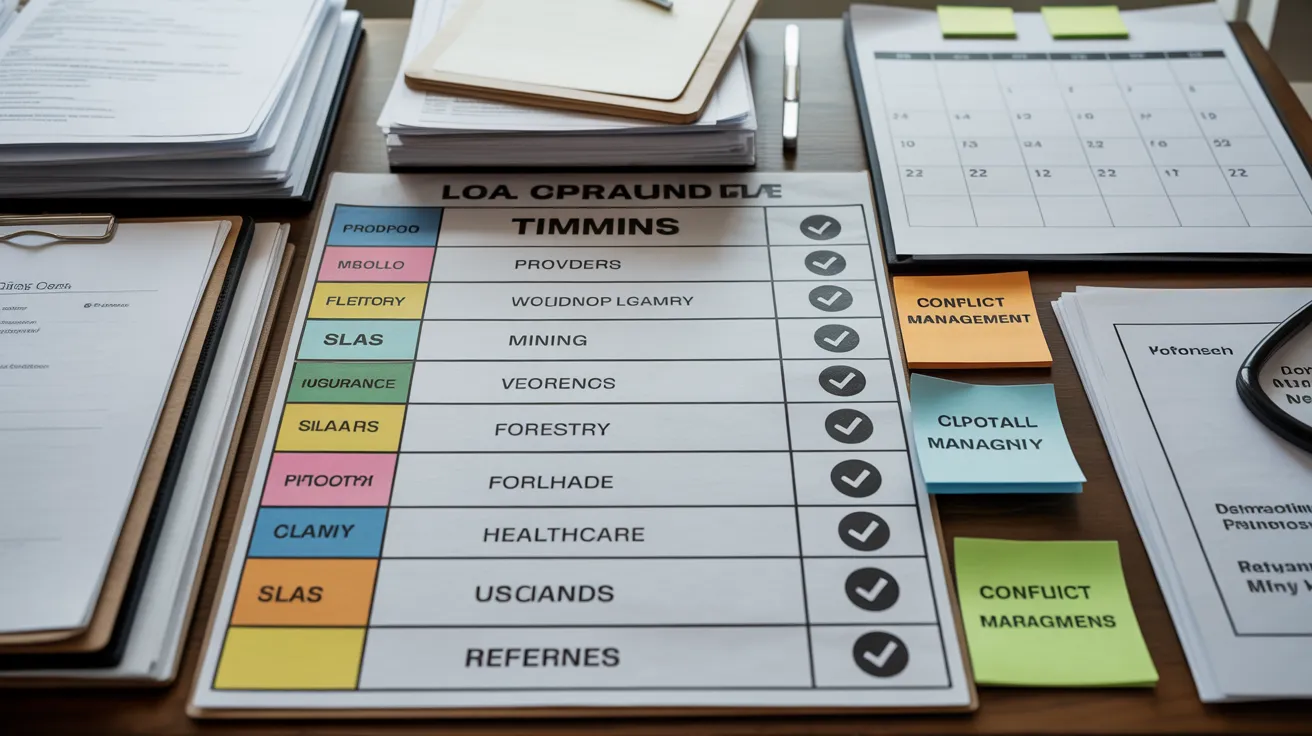
Start strong by standardizing the fundamentals: well-structured checklists, concise SOPs, and conforming templates that meet Timmins' OHSA and WSIB requirements. Create a complete library: onboarding scripts, incident review forms, accommodation requests, work reintegration plans, and accident reporting flows. Link each document to a designated owner, review cycle, and change control.
Develop training plans by job function. Utilize skill checklists to validate mastery on security procedures, respectful workplace conduct, and data handling. Align training units to potential hazards and compliance needs, then arrange review sessions on a quarterly basis. Embed scenario drills and brief checks to confirm understanding.
Adopt performance here review systems that direct performance discussions, coaching documentation, and improvement plans. Record achievements, impacts, and correction status in a tracking platform. Close the loop: evaluate, reinforce, and modify processes when laws or procedures update.
Popular Questions
What Strategies Do Timmins Employers Use to Budget HR Training?
You manage budgets through annual budgets connected to employee count and key capabilities, then creating backup resources for emergent learning needs. You outline mandatory training, emphasize key capabilities, and schedule training in phases to manage expenses. You negotiate multi-year contracts, adopt mixed learning strategies to lower delivery expenses, and ensure manager sign-off for learning courses. You measure outcomes against targets, implement regular updates, and redistribute unused funds. You maintain policy documentation to guarantee standardization and audit compliance.
Available Grants and Subsidies for HR Training in Northern Ontario
Access various funding programs like the Ontario Job Grant, Canada-Ontario Job Grant, and Canada Training Benefit for staff training. In Northern Ontario, explore various regional initiatives including NOHFC workforce streams, FedNor programs, and Indigenous Skills and Employment Training. Investigate Training Subsidies through Employment Ontario, featuring Job Matching and placements. Use Northern Granting tools from municipal CFDCs for top-ups. Consider stackability, eligibility (SME focus), and cost shares (usually 50-83%). Harmonize curricula, proof of need, and outcomes to enhance approvals.
What's the Most Effective Way for Small Teams to Implement Training Without Business Disruption?
Schedule training by splitting teams and using staggered sessions. Create a quarterly plan, identify critical coverage, and secure training windows in advance. Use microlearning blocks (10-15 minutes) prior to shifts, during lull periods, or independently via LMS. Switch roles to ensure service levels, and appoint a floor lead for supervision. Establish clear agendas, prework, and post-tests. Monitor attendance and productivity impacts, then modify cadence. Announce timelines ahead of time and maintain participation standards.
Are Local Bilingual HR Training Programs Available in English and French?
Yes, bilingual HR training exists in your area. Envision your workforce joining bilingual seminars where French-speaking trainers jointly facilitate workshops, transitioning effortlessly between English and French for policy rollouts, workplace inquiries, and respectful workplace training. You get parallel materials, standardized assessments, and straightforward compliance guidance to Ontario and federal requirements. You can schedule modular half-day sessions, track competencies, and record participation for audits. Have providers confirm instructor certifications, linguistic quality, and ongoing coaching access.
What Metrics Prove ROI of HR Training in Timmins Businesses?
Monitor ROI through concrete indicators: improved employee retention, decreased time-to-fill, and lower turnover costs. Observe performance metrics, error rates, safety violations, and attendance issues. Compare before and after training performance reviews, career progression, and job rotation. Track compliance audit success metrics and grievance resolution times. Connect training costs to outcomes: reduced overtime, fewer claims, and better customer satisfaction. Employ control groups, cohort studies, and quarterly reports to verify causality and secure executive buy-in.
Conclusion
You've analyzed the essential aspects: workplace regulations, employee rights, recruitment, performance tracking, investigations, and safety measures. Now envision your organization with aligned policies, well-defined forms, and confident leadership operating seamlessly. Witness conflicts addressed early, files organized systematically, and reviews conducted smoothly. You're close to success. Only one choice remains: will you implement professional HR resources and legal assistance, adapt tools to your needs, and book your first consultation immediately-before the next workplace challenge requires your response?